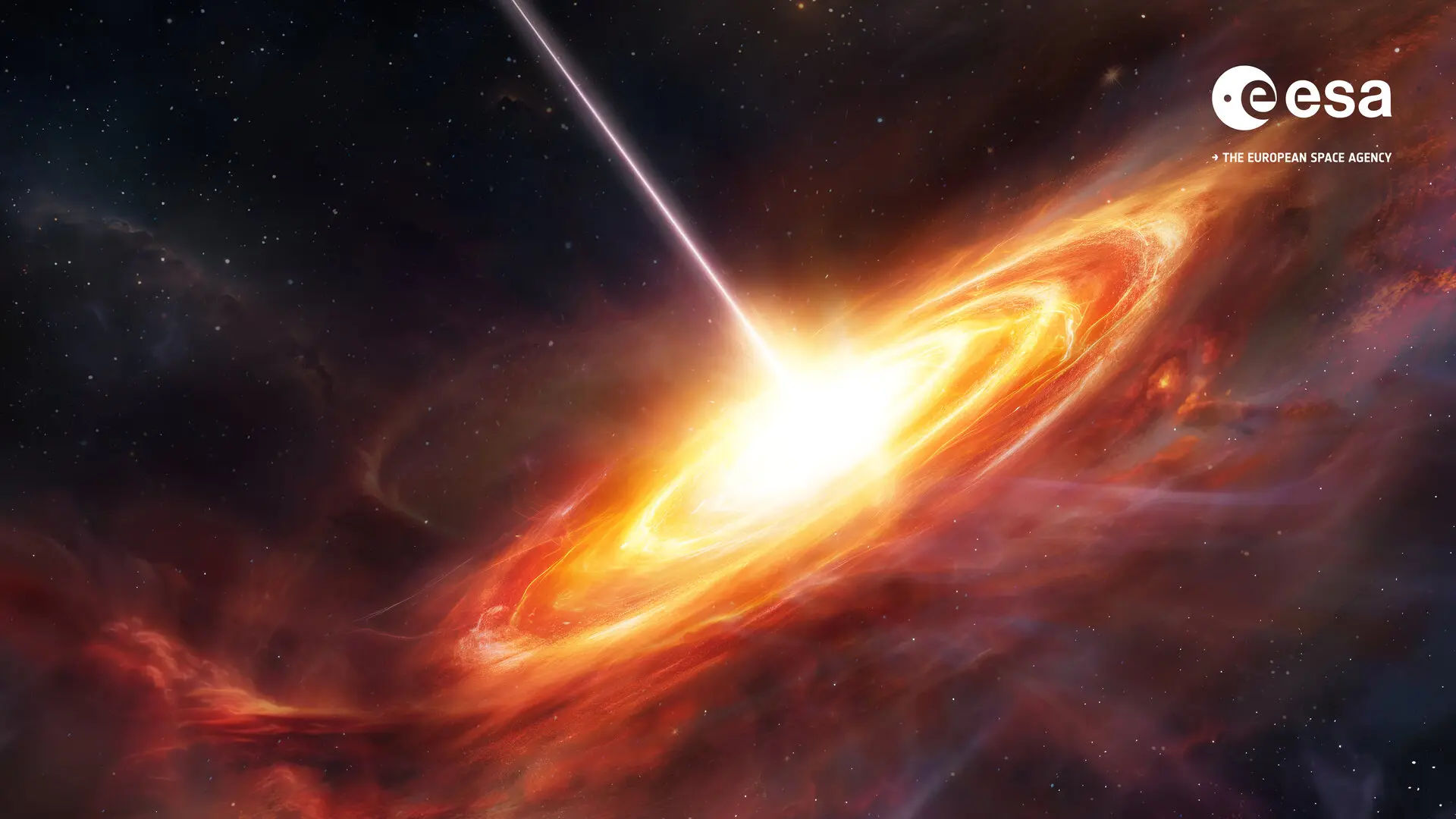
Quasars from the dawn of time
A quasar is not a star. It is the blinding core of a young galaxy in which a supermassive black hole is gorging on infalling gas and dust, releasing more energy than a trillion ordinary suns. For decades, finding these ancient torches from the universe's first billion years was painstaking, slow work, one object at a time. On July 6, 2026, ESA's Euclid space telescope changed everything. In a single paper published in Astronomy and Astrophysics, the Euclid team announced 31 newly confirmed quasars from the early universe, including the two oldest ever observed, blazing when the cosmos was only 670 million years old. The previous total of known quasars this ancient, gathered over more than a decade, was fewer than 10.
Telescope
ESA Euclid (launched July 2023)
New quasars confirmed
31 (most-ever in a single study)
Universe age at oldest quasar
670 million years
Redshift record
z = 7.77 (EUCL J172902.75+641018.1)
Brightness
equivalent to 1 trillion suns
Black hole mass
billions of times the mass of the Sun
Previous record (before July 2026)
redshift z = 7.64
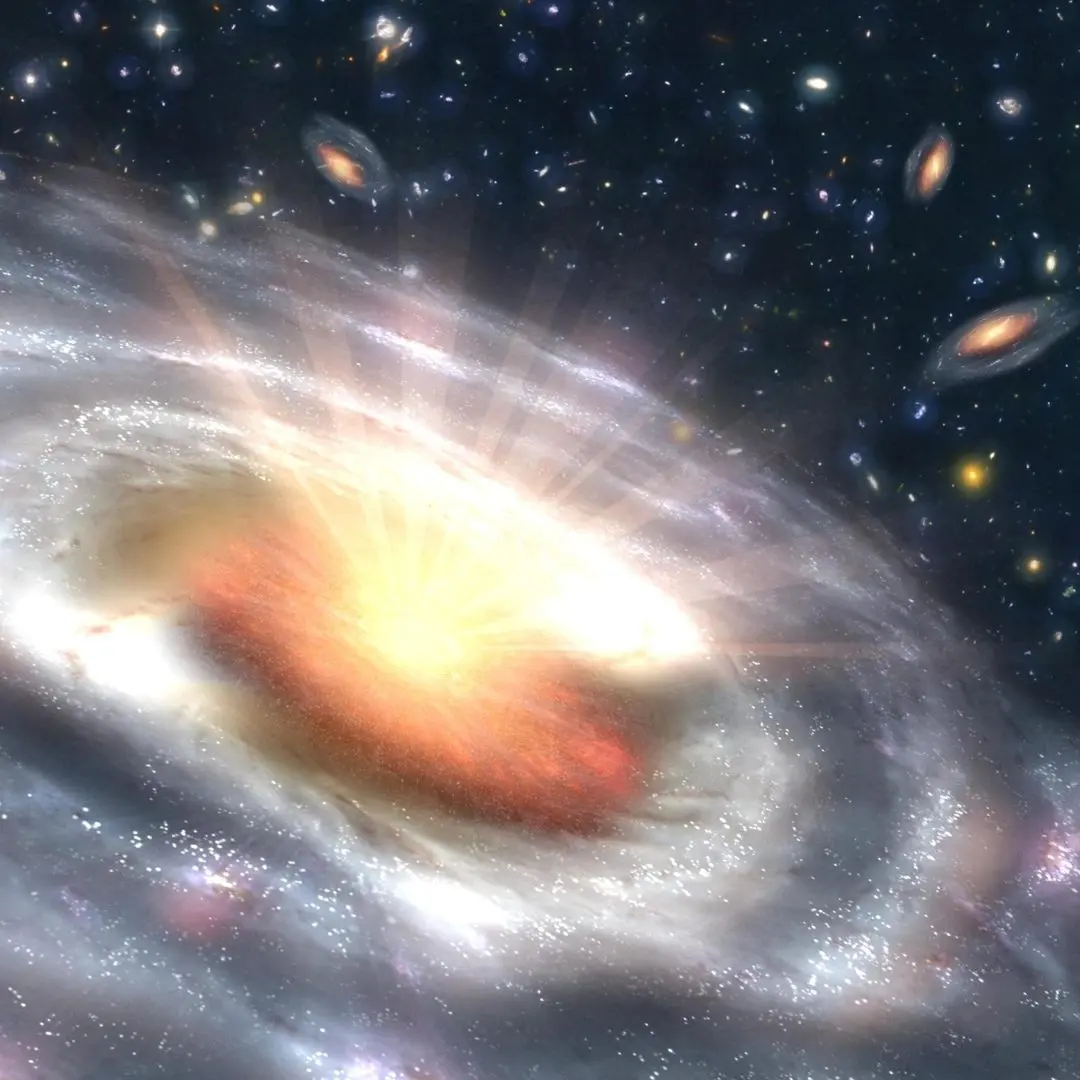
670 million years after the Big Bang
The monster at the centre
Why these objects challenge physics: to weigh billions of solar masses by the time the universe was under 700 million years old, these black holes would have had to start from massive seeds and grow continuously at the theoretical maximum rate. Some models invoke direct-collapse black holes, others require primordial black holes from the first seconds after the Big Bang. None comfortably fits all the data. The Euclid finds make the puzzle sharper, not simpler.
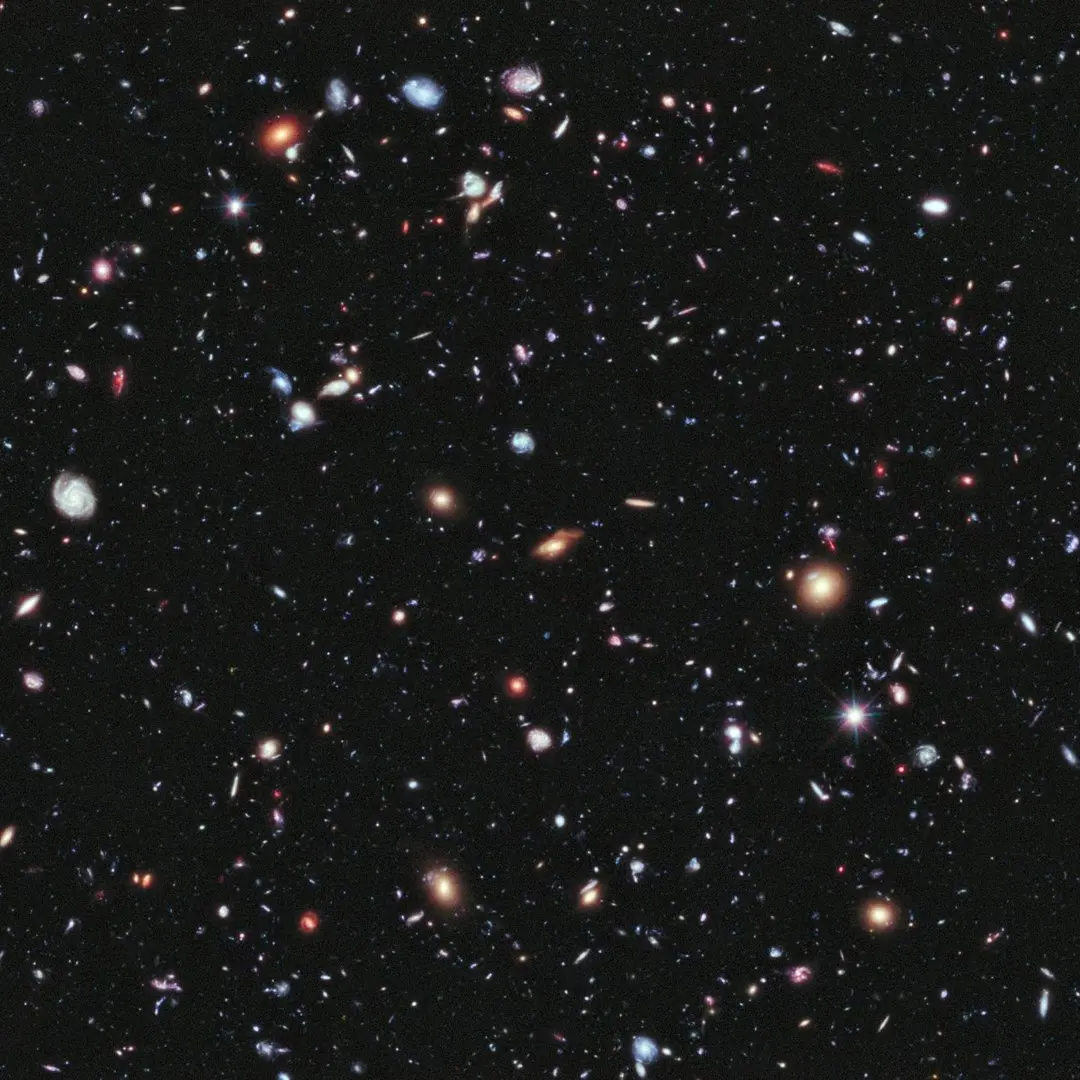
Doubling the census in one paper: before this publication, fewer than 10 quasars with redshift above z = 7 were known, gathered over more than a decade of painstaking follow-up work. The Euclid study added more than that number at once. Lead author Daming Yang of Leiden University called it "a new era" for high-redshift quasar searches. And Euclid has observed only a fraction of its planned survey area so far.
Euclid's wide-field advantage: ground-based surveys must observe tiny patches of sky over years to find rare objects. Euclid covers 15,000 square degrees, roughly one third of the entire sky, in a single deep survey. Its infrared instruments pick up the signature of high-redshift quasars that optical telescopes miss entirely.
What follows: James Webb Space Telescope and the upcoming Extremely Large Telescope (ELT) will study the brightest Euclid quasars in detail, probing their host galaxies, measuring black hole masses more precisely, and hunting for the metal elements that only form after the first stars have lived and died.
"These monsters, weighing billions of times the mass of our sun, somehow already existed when the universe was in its infancy. We don't yet have a good understanding of how they grew so massive, so fast.
"Joseph Hennawi