Lab Notebook 07: Slime Mold Solves the Maze


Dr Iris Okonkwo
Studies problem solving in brainless slime molds.
Abstract
Physarum polycephalum has no brain and no nervous system, yet it reliably finds the shortest route through a maze between two food sources. This notebook records sixty maze runs over four weeks, the protocol, the failures, and a working hypothesis for why a single celled organism behaves as if it can plan.
Protocol per run
Pour 1.5 percent agar and set the acrylic maze on top
Inoculate plasmodium at the entrance
Place oat flakes at the two exits
Dark box at 22 C and 90 percent humidity
Photograph every 2 hours for 48 hours
Repeat with the maze geometry mirrored (week 5)
Shortest path found
51 of 60 runs
Mean solve time
24 hours
Runs discarded
9 of 60
Network efficiency
within 6 percent of optimal
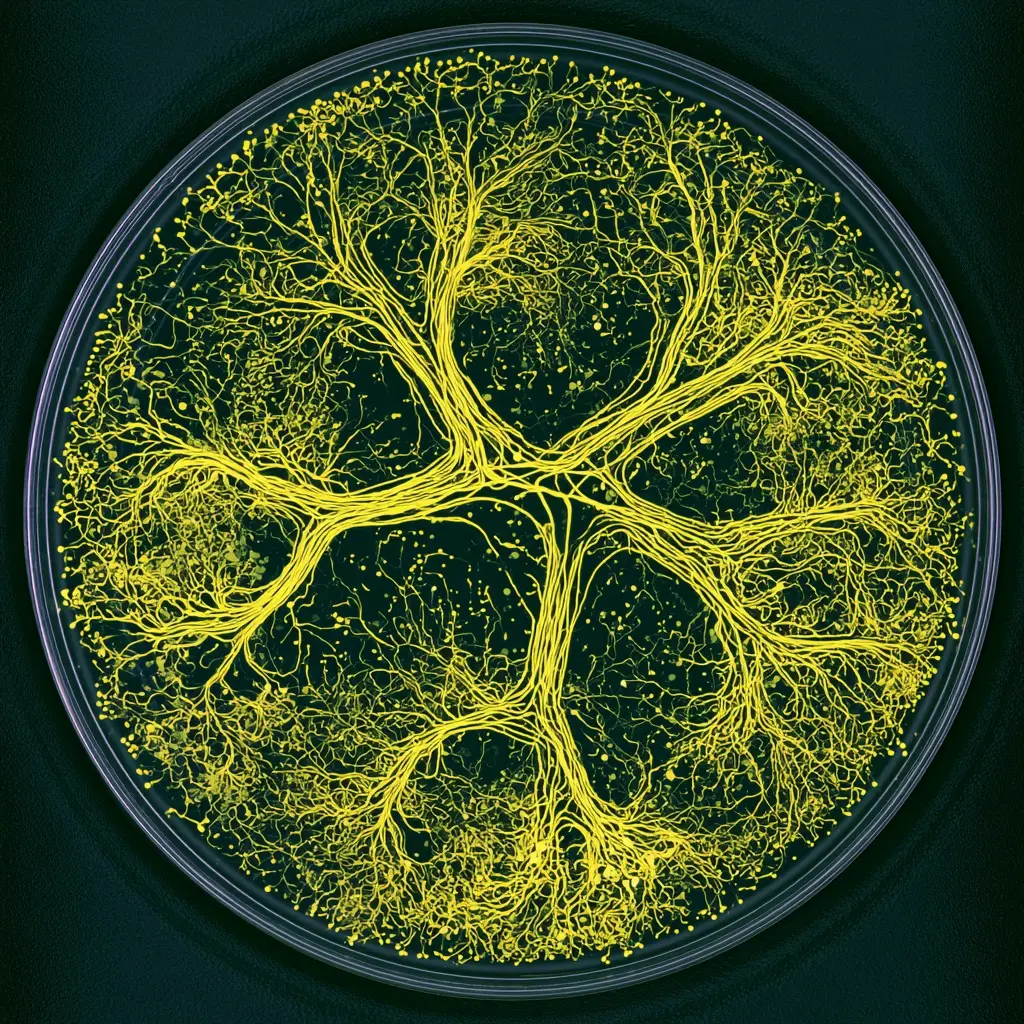

Working hypothesis. The mold lays down a chemical trail it avoids re crossing, so corridors it has already searched repel it. The shortest path is not planned. It is what remains once every dead end has been ruled out.
Repeat the full set with the maze mirrored to rule out any left or right bias in the agar.
Due 30.06.2026"It has no neurons to think with. So either thinking is simpler than we believe, or the mold is doing something we do not yet have a word for.
"Dr Iris Okonkwo